The Maona Rosa is the third “must-see” wreck in Slovenian waters, completing the trio with the DTM Kec and the Gilda. While it lacks the military silhouette of the Kec, it is a favorite for divers due to its incredible biodiversity.
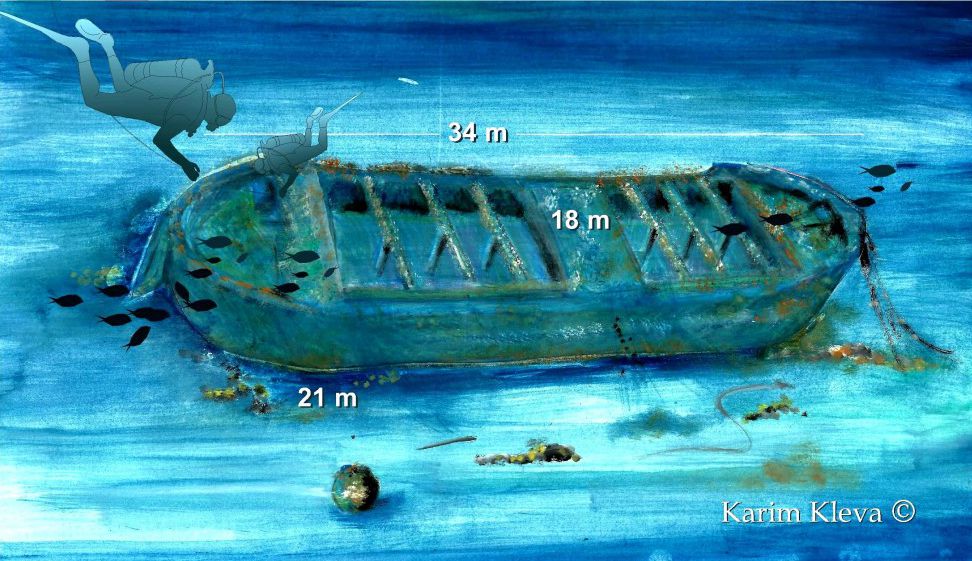
The Wreck of the Maona Rosa – The Iron Giant of Piran
Located in the middle of the Bay of Piran, the Maona Rosa is a silent witness to the heavy maritime traffic and the dangers of the mid-20th century. Unlike the other wrecks, this wasn’t a sleek warship but a hardworking industrial barge.
What was a “Maona”?
A Maona is a type of large, sturdy, iron-hulled cargo barge typical of the Adriatic. These vessels lacked their own engines (no propulsion) and had to be towed by a tugboat. They were the “semi-trucks” of the sea, used to move heavy bulk goods like coal, salt, or ore.
The Sinking: A Target in the Bay
The Maona Rosa met its end during World War II. History suggests two possible causes, both common for the era:
- Air Attack: According to local records, Allied aircraft targeted a tugboat that was towing two Maonas through the Bay of Piran. While the tug and one barge escaped, the Maona Rosa—heavily laden with bauxite (aluminum ore)—was hit and sank almost instantly.
- The Mine Theory: Some historical accounts suggest it may have struck a naval mine while being towed through the heavily guarded waters near Piran.
The ship sank about 2.4 km (1.5 miles) southwest of Cape Madona (Piran). Fortunately, the three crew members on board managed to jump clear and were rescued.
The Wreck Today
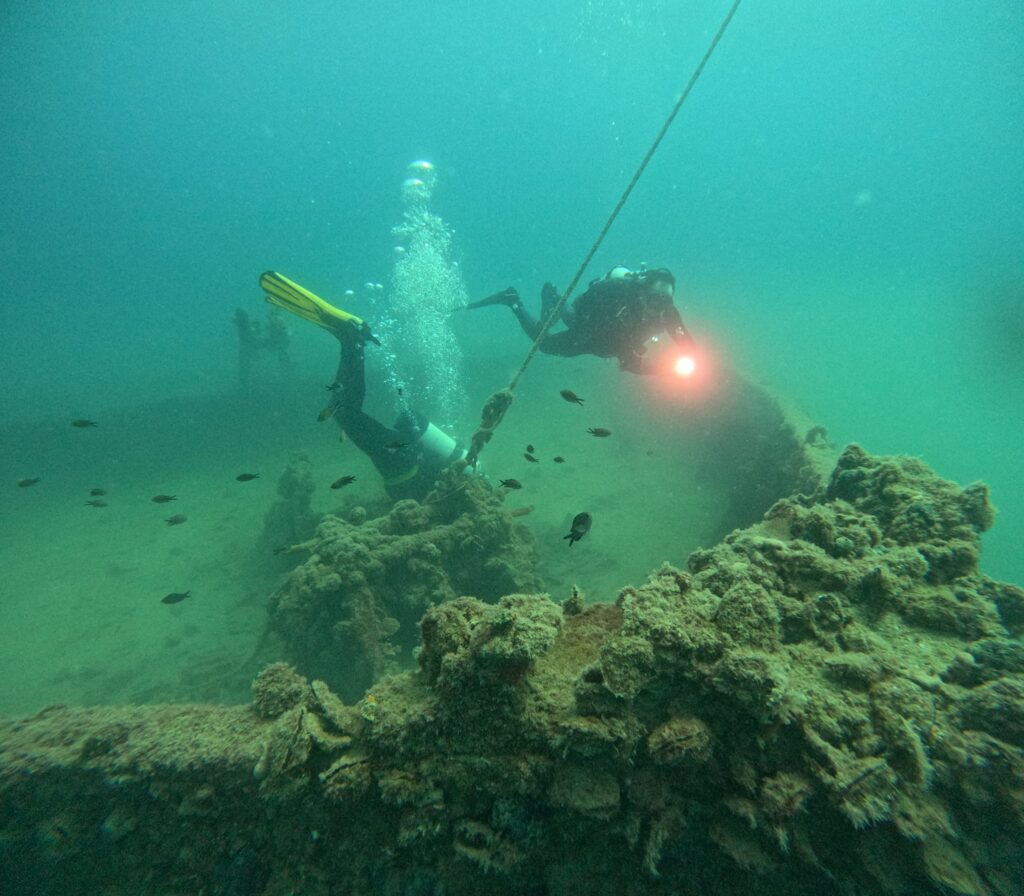
The Maona Rosa lies on a muddy seabed at a depth of 21 meters.
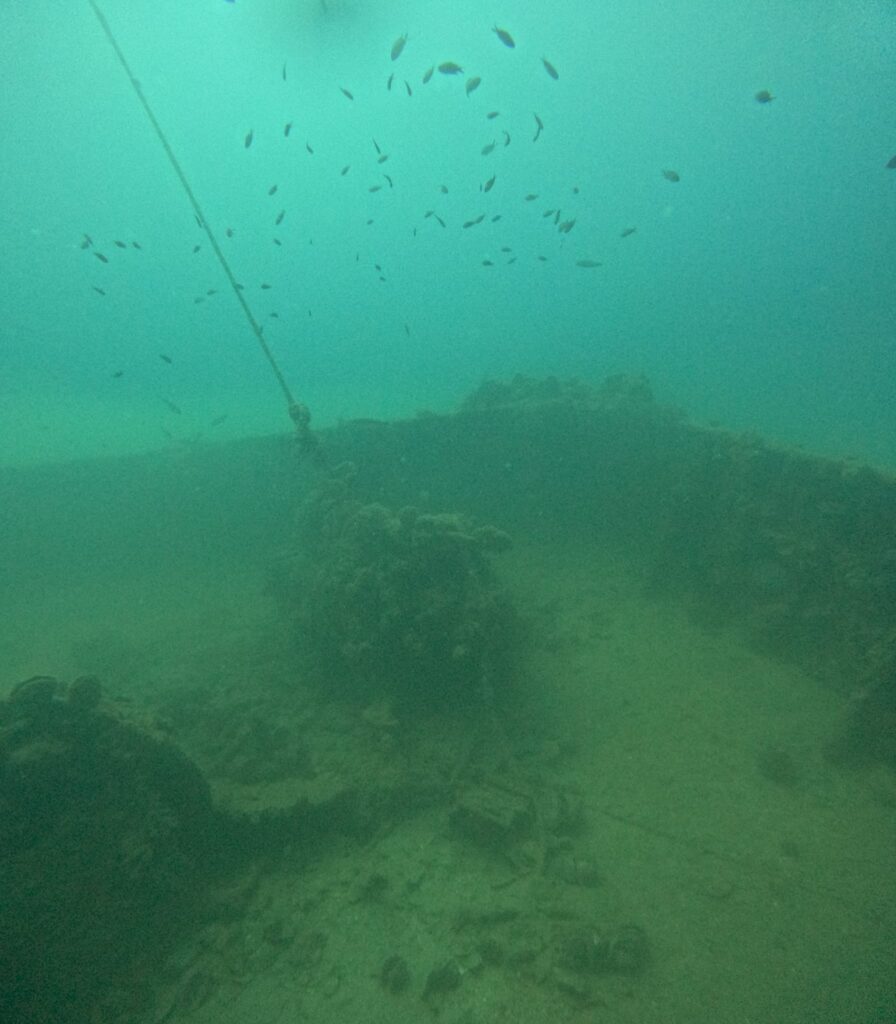
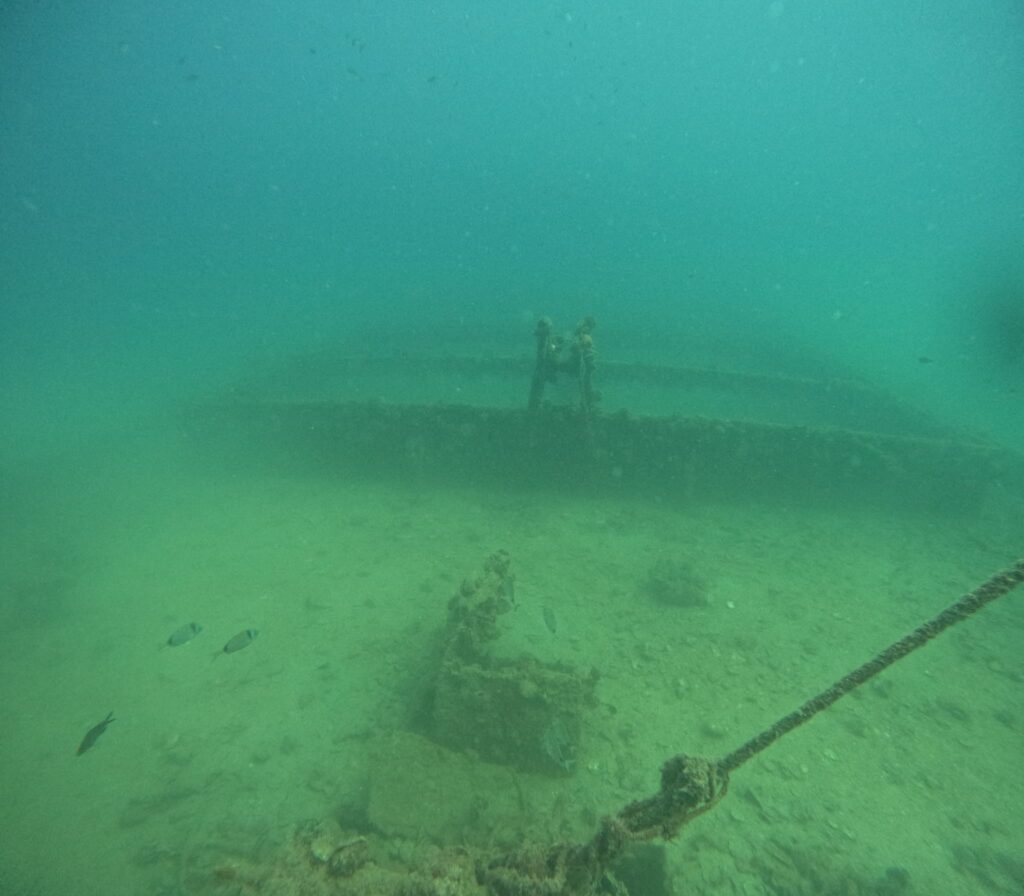
- Structure: The iron hull is approximately 28 meters long and 11 meters wide. It sits upright, though its “spine” (the internal cross-beams) is now exposed, looking like the ribcage of a giant whale.
- The Mud Factor: Because it sits on a silty bottom, the visibility can be unpredictable. However, when the water is clear, the sight of the massive iron structure emerging from the gloom is hauntingly beautiful.
- Missing Artifacts: When first explored in the 1980s, the ship still had its large 2.4m anchor and steering wheel, but these have sadly been scavenged over the decades.
An Underwater “City”
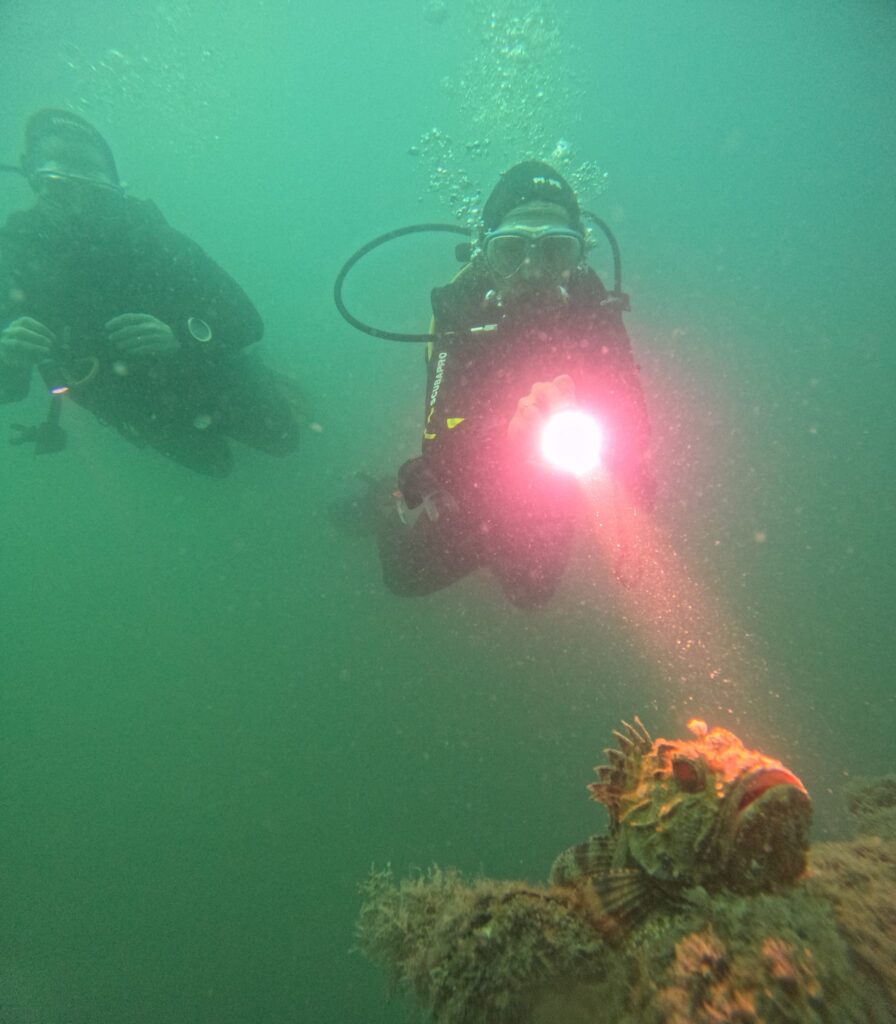
The Maona Rosa is famous among local divers not for its steel, but for its inhabitants. Because it provides the only hard shelter in a vast “desert” of mud, it has become a massive artificial reef.
- Marine Life: It is home to massive conger eels, lobsters, and schools of sea bream.
- The “Macro” Paradise: For underwater photographers, the wreck is covered in colorful sponges and a huge variety of nudibranchs (colorful sea slugs).
Significance
The Maona Rosa represents:
- Industrial History: A reminder of the bulk transport that fueled the region’s economy.
- Biological Value: One of the most important biodiversity “hotspots” in the Slovenian sea.
- Accessibility: Its relatively shallow depth makes it a perfect site for Advanced Open Water divers to practice wreck navigation.